
Three rounds, one sitting
A full ceremony pours three rounds from the same grounds, and leaving before the third is a small rudeness. Each round is weaker and a little sweeter than the last.
How it runs
Green beans are washed, roasted in a pan until they crack and darken, and carried round the room so everyone takes the smoke. They are ground, brewed in the jebena over coals or a fernello, and poured from a height into handleless cups. Frankincense burns throughout.
- Wash and roast — green beans over direct heat until oil shows and the crack comes.
- Carry the smoke — the pan is offered round before grinding.
- Grind — traditionally with mukecha and zenezena; a hand grinder is common now.
- Brew — grounds and water in the jebena, brought up slowly and allowed to settle.
- Pour — from height, in one continuous motion, filling every cup in a single pass.
- Serve — with sugar, sometimes salt or butter, and a snack of kolo or beso.
The pieces
The pot, in two forms
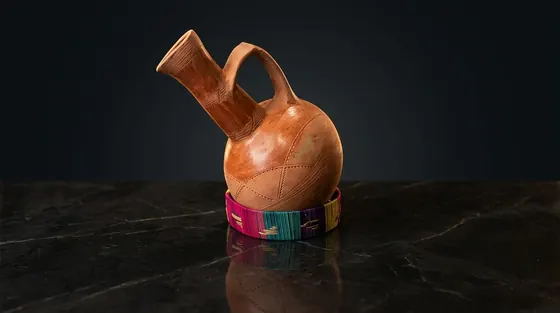
The Ethiopian jebena has a long neck and a side spout, glazed black, made to sit straight on the coals. The Eritrean form is rounder, unglazed terracotta with incised decoration, and comes with a woven ring to stand it on. Both brew the same way; which one a household wants is usually about where they are from.
Small cups, no handles
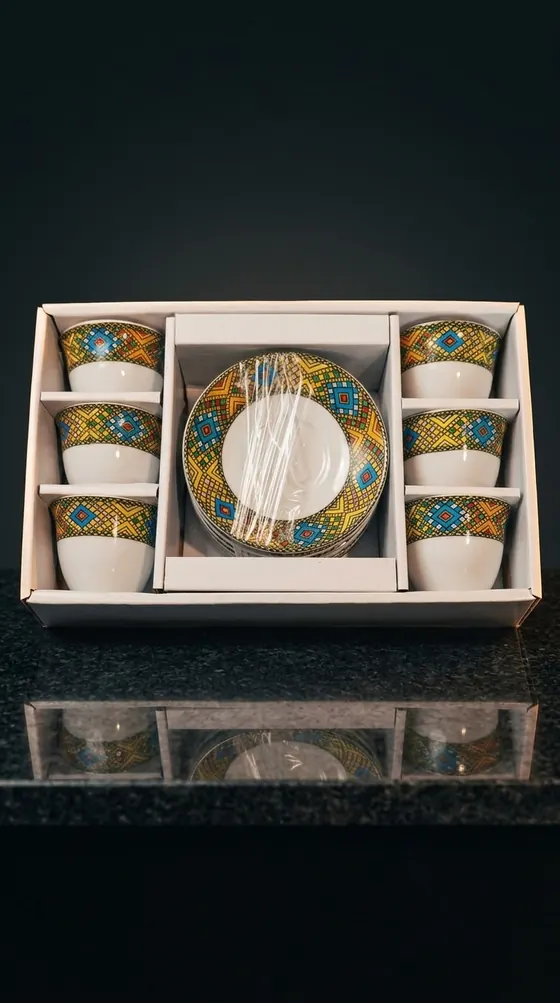
Finjal are small and handleless — you hold them by the rim and the base, which is part of why the coffee is poured to settle rather than served scalding. Sold boxed by the dozen, or as a six-and-six set with matching saucers in the woven telet pattern. Saucers are stocked separately too, because they break first.
Heat, without the charcoal
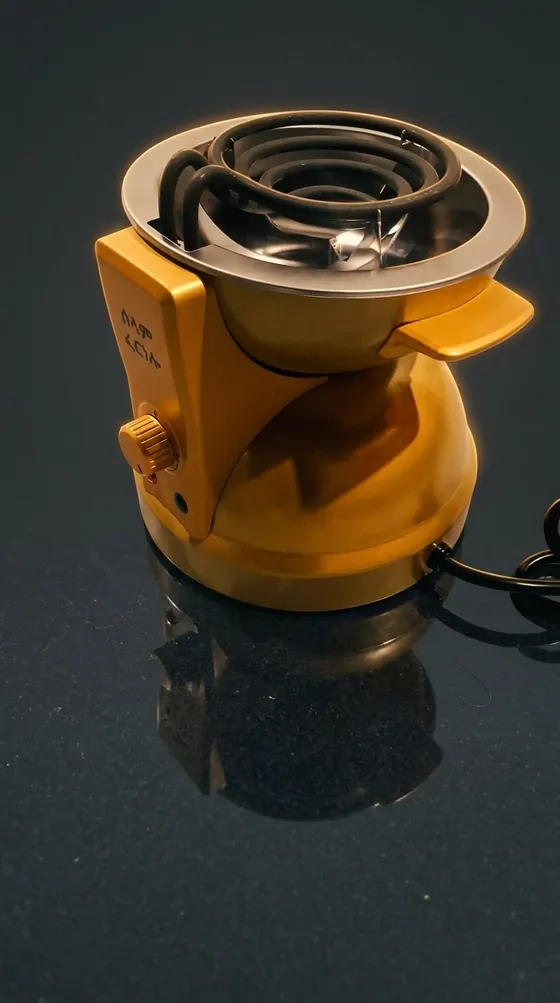
Charcoal is traditional and still preferred outdoors, but it is not practical in a Canadian apartment in February. The Selam electric fernello takes a jebena directly on a coiled element with a variable dial — the single most-asked-for piece by families who have moved into flats.
Incense runs alongside
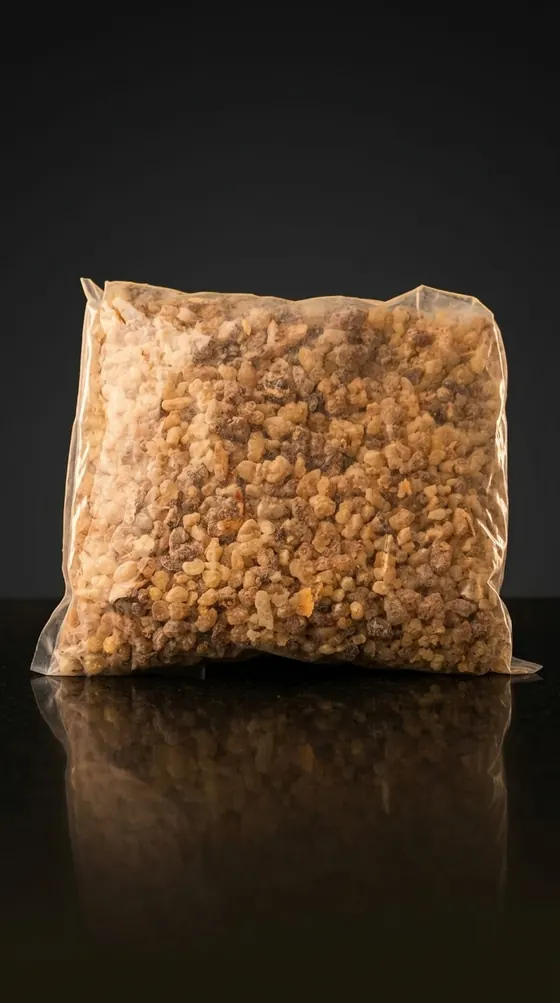
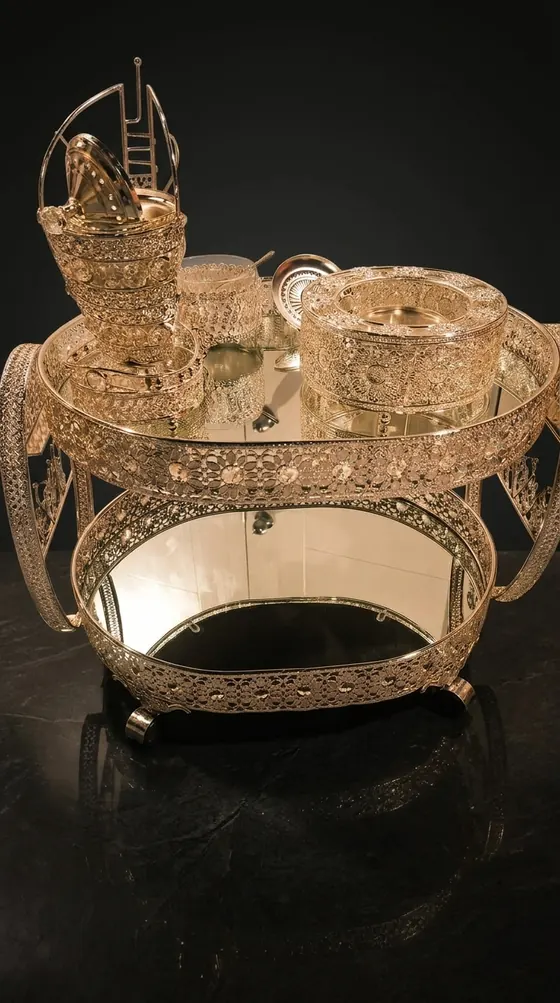
Frankincense burns from the moment the beans are washed. Church-grade resin gives the clean, high smoke most families expect; karfa — cinnamon bark — is warmer and sweeter. Either goes on coals in a censer, and the gold filigree burner is the piece that matches a rekebot for a formal setting.
The formal setting
For weddings, holidays and a mesob of guests, the ceremony moves onto a rekebot — a two-tier filigree trolley with mirrored shelves holding the jebena, cup rack, sugar bowl and censer together. It is the piece people photograph, and the reason a ceremony sale is rarely one item.
Stock the whole ceremony
Pot, cups, saucers, burner, incense and spoons — quoted together as a kit.